

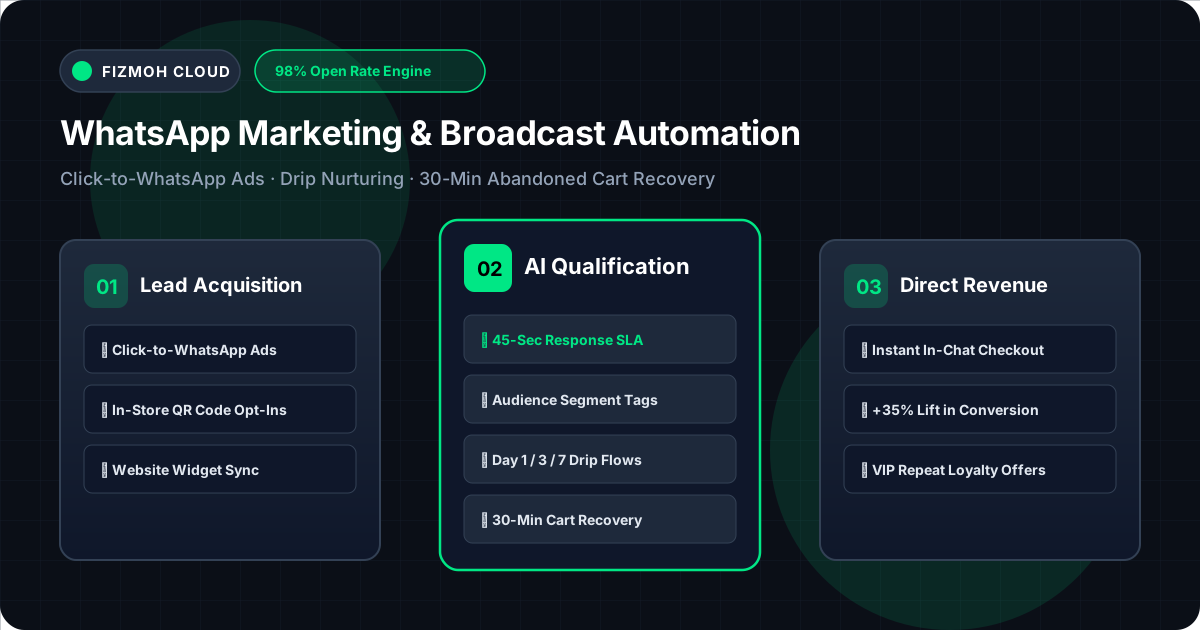
Most WhatsApp marketing advice starts with tools. It should start with permission, because permission is the only thing standing between a working channel and a banned number.
This guide covers the sequence that actually works: getting opt-in, understanding the messaging window, writing messages worth replying to, and the mistakes that quietly destroy a sender's reputation.
1. Start with opt-in, not a contact list
The most common way businesses fail at WhatsApp is importing a list of numbers they already have and starting to send. Those people never agreed to hear from you on WhatsApp, and WhatsApp measures that directly: every block and every "report" pushes your quality rating down, and a low rating cuts your daily messaging limit before it eventually stops you entirely.
Consent that actually holds up:
- A checkbox at checkout that names WhatsApp explicitly
- A Click-to-WhatsApp ad, where the customer opens the conversation
- A QR code the customer chooses to scan
- Someone messaging you first
Record where each opt-in came from and when. You will need it if Meta asks, and you will want it when deciding who is safe to message.
2. Understand the 24-hour window
This one rule shapes everything:
- A customer messages you → you may reply freely for 24 hours
- Outside that window → you may only send a pre-approved template
Templates are categorised, and the category is not cosmetic — it determines both price and what you are allowed to say:
| Category | For | Notes |
| Utility | Order updates, reminders, receipts | Cheapest; must relate to an existing transaction |
| Authentication | One-time codes | Strictly codes only |
| Marketing | Offers, launches, re-engagement | Most expensive, most likely to be blocked |
Miscategorising a marketing message as a utility one to save money is the fastest route to template rejection and account review.
3. Write messages people reply to
WhatsApp is not email. A message that would look brief in an inbox looks like an essay in a chat.
What works:
- Lead with the specific thing. "Your Saturday 6am safari is confirmed" beats "An update on your booking."
- One action per message. Two links means neither gets tapped.
- Use buttons rather than instructions. A tappable "Confirm" beats "reply YES to confirm."
- Write like the person, not the brand. These arrive between messages from family.
- Answer in the language they wrote in. In the Gulf that means Arabic and English, and often Arabic in a Gulf dialect.
What does not work: block capitals, three emoji per line, and anything that reads like an SMS blast from 2010.
4. Five mistakes that get numbers blocked
- 1Buying or scraping numbers. Fastest possible ban, and it takes the number with it.
- 2Ignoring opt-outs. If someone says stop, stop — including for "just one more" campaign.
- 3Sending at the wrong hour. A marketing message at 11pm gets blocked rather than read.
- 4The same broadcast to everyone. Irrelevance is what makes people report you.
- 5No reply path. Sending from a number nobody monitors trains customers to block you.
Recovering a damaged quality rating takes weeks of good behaviour. Not damaging it is much cheaper.
5. Measure replies, not sends
Delivered and read rates flatter you. The numbers that matter:
- Reply rate — did the message start a conversation?
- Completed actions — bookings made, carts recovered, payments taken
- Opt-out rate — the earliest warning that your targeting is wrong
- Cost per completed action — not cost per message
A campaign with a 20% reply rate and 40 bookings beats one with a 98% read rate and none.
Where to start
Pick the one message you send most often — a booking confirmation, a payment reminder, an order update — and move it to WhatsApp first. It is transactional, so it is cheap and welcome. Get that working, watch your quality rating hold, and expand from there.